
What happens to a house when the owner dies with no known family
Nothing, for a while. The house stays in the dead person’s name. Taxes go unpaid, insurance lapses, the lawn grows, and eventually code enforcement, a tax certificate holder, or a mortgage lender forces the issue — a tax deed sale or foreclosure that wipes out the heirs’ inheritance entirely. Florida’s intestate law (§ 732.103) almost always identifies someone: a sibling’s child, a first cousin, the family of a late spouse. Only if truly no relative exists does the property escheat to the State of Florida (§ 732.107), and even then an heir who later appears has years to claim the proceeds.
How heirs get found
We use licensed private investigators and professional genealogists. Starting from a name, a date of birth, and a county, they work through vital records, obituaries, immigration and naturalization files, and international records to build a family tree and locate living relatives. We have found heirs in other states and in other countries; one family we helped is a man in Romania who learned from us that he was next of kin to a son he had lost touch with decades earlier.
When we find an heir, we tell them the truth: who died, what they owned, what probate involves, and what the house is worth as it sits. We offer to pay for the probate and to buy the house, and we are clear that they can take the house, list it, or sell it to anyone they choose.
Short version: if you want the house sold, we pay for the probate and get the attorney working within 24 hours — call or text (727) 353-6206, or use the form.
Who can open the probate?
Any “interested person” — an heir, a creditor, or someone with a claim on the estate — may petition. In an unclaimed estate the heir we located usually serves as petitioner, and a curator or a professional personal representative can be appointed when no relative is able to serve. Because these deaths are often more than two years old by the time anyone acts, summary administration is frequently available, which keeps the cost and time down.
If you’re the neighbor, the friend, or the distant relative
You may be the only person who knows the house is sitting empty. You don’t need any authority to call us — tell us the address and what you know, and we will do the research. If you are in fact an heir, we will walk you through what that means. If you aren’t, you will have done a kindness for someone who will one day find out a relative left them a house.
Why we do this
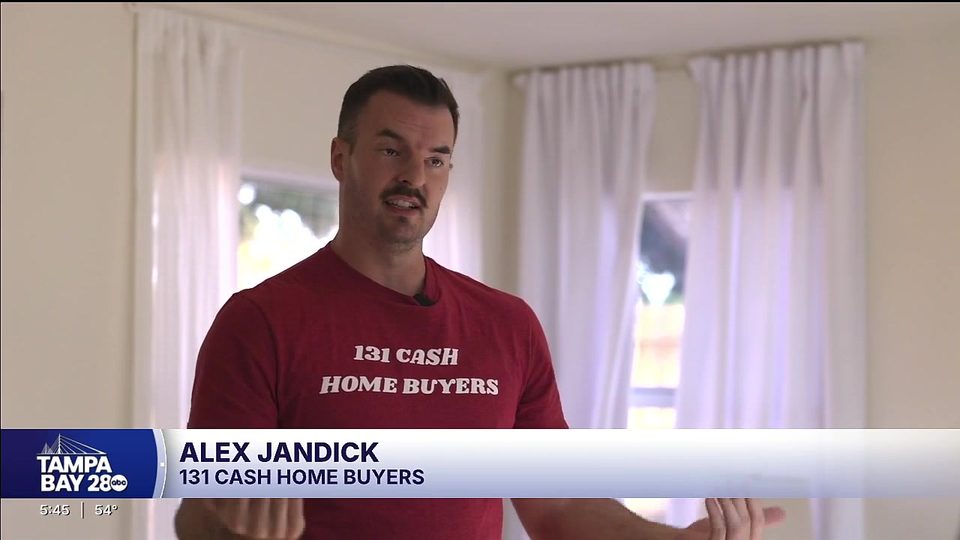
Alex started tracking down the owners and heirs of abandoned St. Petersburg houses years ago — the ones Tampa Bay 28 calls “zombie houses.” One had an owner whose death went unnoticed for years; after Alex bought it, it was fully renovated and Tampa Bay 28 came back to film the result. Finding the people a house belongs to is slow, unglamorous work, and it is the most satisfying thing we do.
Questions people ask
What happens to a house in Florida if the owner dies with no heirs?
If no relative exists under § 732.103, the property escheats to the State of Florida after probate, and the sale proceeds are held for a period during which a later-discovered heir can still claim them. In practice an heir almost always exists and simply hasn’t been found.
How do I find out if I’m the heir to a relative’s house?
Start with the county property appraiser (owner of record) and the clerk of court’s probate search (whether an estate has been opened). Then map the family tree under Florida’s intestate order. If you’d like help, call us — we do this research at no charge.
Can a neighbor or friend inherit a house in Florida?
Only by will. Without a will, only relatives inherit. A friend or neighbor can, however, be the person who starts the process by alerting the right people.